
Can Interpretation Apps Show Original and Translation Together? [Guide]
Sometimes the hardest part of following a conversation in another language is not understanding nothing. It is understanding most of a sentence, then wondering whether you caught one important term correctly. You look it up, return to the room, and the speaker has already moved to the next point. If you read only the translation, you may still wonder what the original phrase was.
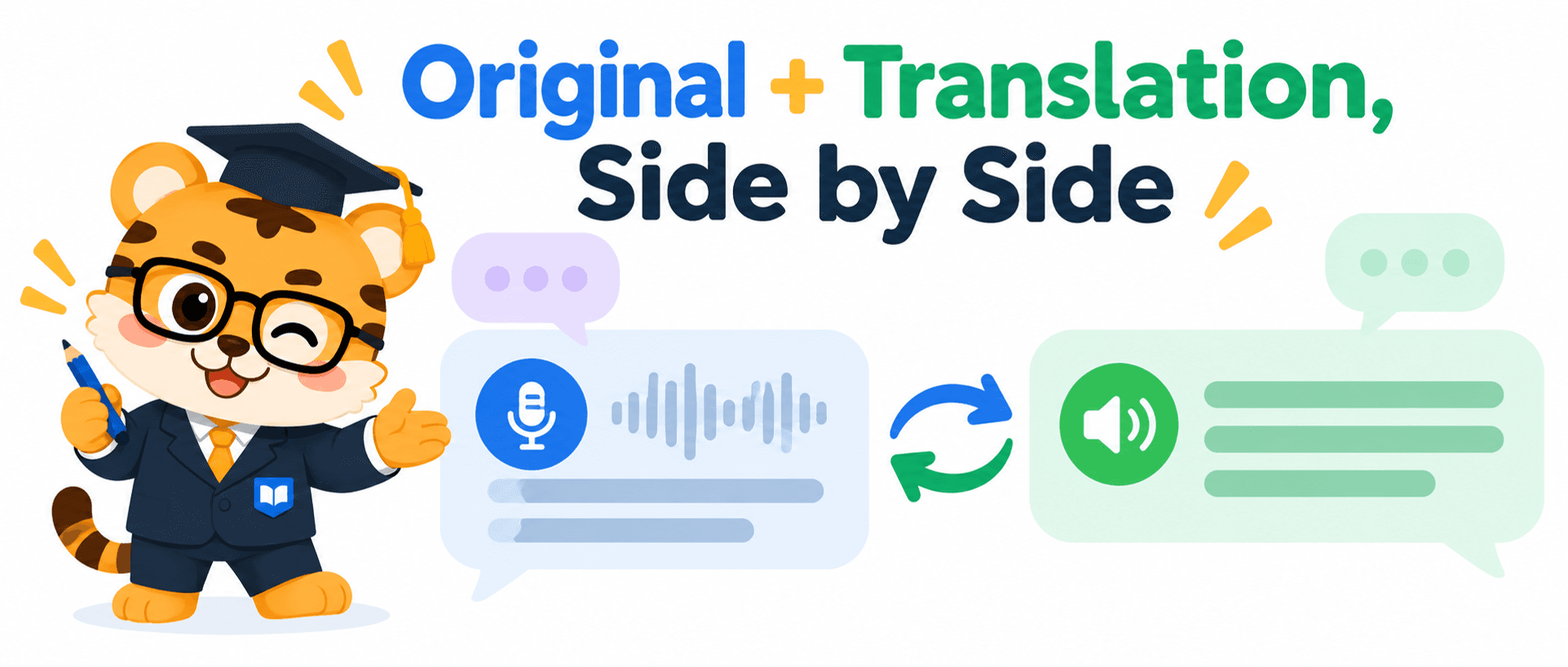
Can an interpretation app show both the original and the translation at the same time? Yes. Live interpretation tools can continuously recognize speech and present the original and translated text as bilingual captions. You can listen, use the translation to follow the meaning, and check the original when a key term needs a second look. The value is more than having two lines on screen. Both versions remain connected to the same moment in the conversation.
Still, two lines of captions do not mean you need to read every word in both languages. The useful question is how to let them support your attention without drawing all of it to the screen.
01 Keep the meaning and the speaker’s words in view

Captions in one language give you a result. Bilingual captions keep another reference nearby. In class, you can follow the translation for the main idea, then glance at the original to confirm a course term, name, or abbreviation. In a meeting, the translated line can help you keep up, while the original lets you check what someone said when a phrase matters.
It is a little like using a map that shows street names alongside familiar directions. The directions tell you where to go; the street names help you match those instructions to what you see when you turn. The two languages on screen serve different purposes. They are not an invitation to read every sentence twice.
I find this especially helpful when you are getting used to studying or working in another language. Familiar course terms begin to look recognizable in the original. When a long sentence or unfamiliar expression appears, the translation can help you hold on to the main idea. You do not have to strain to understand everything without support, and you do not have to leave the conversation every time you want to check a word. Understanding the subject and becoming familiar with the language can happen during the same class.
Try listening for the complete idea while the translated line keeps you oriented. Then check the original for a key term or an expression you are unsure about. Bilingual captions work like a handrail for your attention, helping you keep your place as the conversation moves forward.
02 Read both lines without letting the screen lead

Showing original and translated speech together does not require a word-by-word comparison. A speaker may add a thought while talking, and captions can update as speech continues. If your eyes jump between two lines after every phrase, it is easy to lose track of the point being explained. Captions should help you recover context, rather than become a new reading assignment.
One simple rhythm is to listen first, use the translation to catch the main idea, then check one or two details in the original. A key concept from a lecture, a date or number from a meeting, or a project name repeated several times may deserve a closer look. Greetings and transition phrases can often pass while you keep listening. If you miss a line, note where it happened and return to it during a pause. That can make it easier to stay with the next part.
Your screen also changes how you read. A phone works well for a quick glance, while a computer or tablet can fit longer lines more comfortably. If you notice your eyes working harder than your ears, bring your attention back to the speaker and use captions when needed. Let captions support the conversation, and the conversation can keep its own pace.
The most useful moment for bilingual captions is often when you want to confirm a phrase without losing the surrounding idea. Keeping that purpose in mind makes it easier to know which line to check.
03 Save the captions and keep working after the conversation

Live captions help in the moment. Saved records can extend that understanding after the conversation ends. After class, you can return to a definition you did not have time to write down. After a meeting, you can find a phrase to add to your notes. Having both the original and the translation nearby can make it easier to preserve the speaker’s wording alongside your own understanding.
That is one feature I look for in an interpretation app: whether captions can connect to a useful review routine. Huhu, also known as 优秀同传, is designed for classes, meetings, and cross-language communication. It supports real-time speech recognition, bilingual captions with the original and translation, saved interpretation records, and bilingual SRT export. Its web experience also includes WAV and MP3 audio import and transcription. Visit the official Huhu website to learn more, then see how it fits the kinds of classes or meetings you attend.
I like the continuity of listening now and organizing later. During the conversation, you do not have to force yourself to write down every word. Afterwards, you can use the bilingual record to fill in terms, examples, and questions. Captions do not take notes for you, but they can leave a fuller trail to follow when you make them.
Think back to that opening moment: you look up one word, then return after the speaker has moved on. Showing the original and translation together gives you a reference you can revisit. Listen for the idea, check the details, and organize what matters afterwards. You do not need to read both lines from start to finish. If the captions help you stay with the conversation, they are doing useful work.
If this guide helped, feel free to leave a like.
Thanks for reading. See you next time.